Menu
- Efficiency
- Productivity
- Organisation
- Safety
- Employee Empowerment
CUSTOM FIFO SOLUTIONS ENSURE USAGE OF OLDEST MATERIALS FIRST WHEN IT COMES TO STOCK CONTROL
AN ESSENTIAL VISUAL CONTROL IN YOUR LEAN MANUFACTURING TOOLKIT
Available in custom sizes, we design, fabricate and install to suit your workflow. Choose from various configurations
A FIFO board typically refers to a “First In, First Out” (FIFO) board used in inventory management or production processes. It’s a tool or system used to ensure that items or materials are used or dispatched in the order they were received or produced. This helps to maintain proper inventory rotation and prevent obsolescence.
In a manufacturing context, a FIFO board may visually display the order in which items need to be produced or assembled. It can help production teams prioritize tasks and ensure that older materials are used before newer ones to prevent waste.
In a warehousing or logistics context, a FIFO board might track the movement of goods through a storage facility, ensuring that older stock is used or shipped out before newer stock. This can help prevent stock from spoiling or becoming obsolete due to extended storage.
FIFO boards can come in various formats, including physical boards with cards or tags representing items, digital displays, or software-based systems integrated with inventory management software.
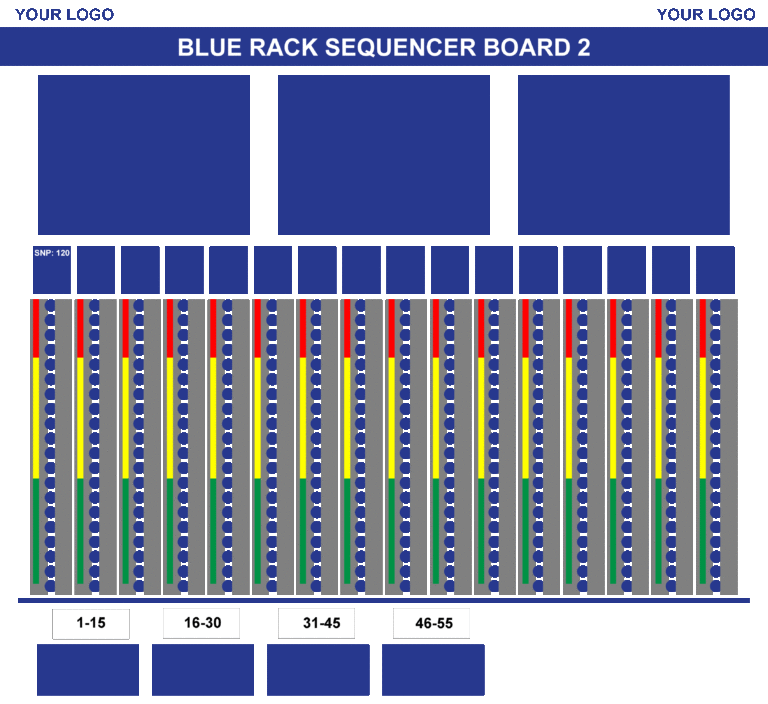
A FIFO (First In, First Out) board is commonly used in various industries, including manufacturing and logistics, to manage inventory and ensure that products are processed in the order they were received. Here’s a general guide on how to use a FIFO board effectively:
Understand the Concept: Before using a FIFO board, it’s important to understand the FIFO concept. FIFO means that the items that enter the system first are also the ones that are processed or used first. This ensures older items are not left unused or expire while newer items are used.
Set Up the Board: A FIFO board typically consists of columns or rows representing different stages of processing or storage. Each column or row represents a specific step in the process. You can set up the board using whiteboards, poster boards, or specialised software, depending on your needs.
Label the Columns or Rows: Label each column or row to indicate the different stages of the process. For example, if you’re managing inventory, the columns could be labeled as “Received,” “In Process,” “Quality Check,” and “Shipped.”
Add Items to the Board: As items are received, add them to the “Received” column or row of the FIFO board. Ensure that you place the newest items at the bottom or end of the column or row.
Move Items Along the Board: As items progress through the process, move them along the board to the next stage. For example, once an item has been processed, move it from the “Received” column to the “In Process” column.
Maintain Order: Ensure that items are always moved in the correct order—oldest items should be processed or used first. This helps prevent inventory spoilage or obsolescence.
Monitor and Update Regularly: Regularly monitor the FIFO board to ensure that items are moving through the process smoothly. Update the board as new items are received or as items progress through the process.
Continuous Improvement: Use the information gathered from the FIFO board to identify areas for improvement in your process. For example, if you notice bottlenecks at a certain stage, you can take steps to address them and improve efficiency.
Train Staff: Make sure that everyone involved in the process understands how to use the FIFO board effectively. Provide training as needed and encourage communication to ensure smooth operations.
By following these steps, you can effectively use a FIFO board to manage inventory or processes in your organization.
Implementing a FIFO board in UK manufacturing can offer several benefits:
Improved Efficiency: FIFO boards help streamline production processes by ensuring that materials are used in the order they were received. This reduces the time spent searching for specific items and minimises production delays caused by using outdated materials.
Reduced Waste: By prioritising the use of older materials first, FIFO boards help minimize waste caused by expired or obsolete inventory. This is especially important in industries with perishable materials or components.
Better Inventory Management: FIFO boards provide a visual representation of inventory levels and usage patterns, allowing manufacturers to better manage their stock levels and reorder materials as needed. This helps prevent stockouts and ensures that production can continue uninterrupted.
Increased Product Quality: Using materials in the order they were received can help maintain product quality and consistency. FIFO boards prevent the use of expired or deteriorated materials, reducing the likelihood of defects or product recalls.
Enhanced Traceability: FIFO boards provide a clear record of material usage, making it easier to trace the source of any issues or defects that may arise during production. This can facilitate quality control efforts and improve overall product traceability.
Optimised Space Utilisation: By ensuring that older materials are used first, FIFO boards help prevent overstocking of inventory, freeing up valuable storage space in manufacturing facilities.
Overall, implementing a FIFO board in UK manufacturing can lead to more efficient production processes, reduced waste, and improved product quality, ultimately contributing to greater competitiveness and profitability in the industry.
Please note the above is for a standard configuration. If you have custom requirements that is not a problem, we can provide the system that fits your needs.